27/08/2026
If you commute through Victoria every day, you already know the pattern: coffee in one hand,...
This Privacy Policy explains how Waste Disposal Belgravia collects, uses, stores and protects personal data relating to our waste disposal and associated services. It applies to all Waste Disposal Belgravia customers and prospective customers in the Belgravia area, including residential, commercial and institutional clients.
We are committed to complying with the UK General Data Protection Regulation and the Data Protection Act 2018. This Privacy Policy is designed to provide clear and transparent information about our data processing activities and your rights.
The data controller responsible for your personal data is Waste Disposal Belgravia. We determine the purposes and means of processing personal data related to our waste disposal services in the Belgravia area.
If you have any questions about this Privacy Policy or the way we handle your personal data, you can contact us using the contact details provided on our main customer documentation or service correspondence.
We collect and process different types of personal data depending on how you interact with us and which services you use. This may include:
Identification and contact data such as name, title, address, email address, telephone number and company or organisation name where relevant.
Service and account data such as service addresses, property access information you choose to provide, service preferences, records of waste collection schedules, bin types or container details, and customer reference numbers.
Billing and payment data such as invoicing details, bank account information or card details processed through secure payment providers, payment history and information needed to manage accounts and resolve billing queries.
Communication data such as records of emails, letters, telephone calls, online enquiries, complaints and feedback, along with notes created by our customer service team.
Technical and usage data such as IP address, device information and basic analytical information relating to the use of any online forms or digital services we operate, where this is collected in the normal course of providing our services.
Operational data such as time and date of collections, photographic evidence collected by crews when needed to verify service delivery, health and safety incident records relating to visits to your premises and other information necessary for service performance.
We process personal data only when we have a valid legal basis under data protection law. Depending on the context, our lawful bases include:
Contract. We process personal data where it is necessary to enter into or perform a contract for waste disposal and related services with you or your organisation. This includes arranging collections, managing your account and handling payments.
Legal obligation. We may process personal data where necessary to comply with legal and regulatory obligations, including environmental, tax, accounting, health and safety or law enforcement requirements.
Legitimate interests. We may process personal data where it is necessary for our legitimate business interests, provided these interests are not overridden by your rights and interests. Examples include improving our services, managing our relationship with you, protecting our operations and preventing fraud or misuse of our services.
Consent. In limited circumstances, we may rely on your explicit consent, for example for certain types of optional marketing communications. Where we rely on consent, you have the right to withdraw it at any time.
We use your personal data for the following purposes:
To set up and manage your waste disposal services, including verifying your details, arranging collections in the Belgravia area and maintaining accurate service records.
To administer billing and payments, issue invoices, process payments through our payment processors and manage any refunds or account queries.
To communicate with you about your services, including service changes, notices about disruptions or access issues, appointment reminders, health and safety information and responses to your enquiries and complaints.
To improve and develop our services, including monitoring service quality, training staff and analysing aggregate data about service usage to plan routes and resources.
To comply with our legal, regulatory and reporting obligations and to cooperate with relevant authorities where required by law.
To protect our business, staff, customers and the community, including the prevention and detection of fraud, abuse or misuse of our services, and the management of health and safety risks during collection activities.
We do not sell your personal data. We may share your personal data with selected third parties where necessary for the purposes described in this Privacy Policy and in accordance with data protection law.
We use third party service providers acting as data processors to support our operations. These may include customer relationship management providers, IT hosting and maintenance providers, payment processing companies, communications service providers, route planning or logistics support providers and document storage or archiving services.
These processors are only permitted to process personal data on our documented instructions, for the purposes we specify and subject to appropriate contractual safeguards, including obligations of confidentiality and security.
In some circumstances we may also share data with professional advisers such as lawyers, accountants and auditors where necessary for legitimate business purposes, and with public authorities, regulators or law enforcement agencies where required by law or in order to protect our rights and the safety of others.
Where our service providers are located outside the United Kingdom or where data is stored or accessed from outside the United Kingdom, we take steps to ensure that appropriate safeguards are in place. These may include the use of standard contractual clauses or reliance on adequacy regulations, in accordance with applicable data protection law.
We retain personal data for as long as necessary to fulfil the purposes for which it was collected, including to provide services to you, meet our legal and regulatory obligations and resolve disputes.
Customer account and contract information is typically retained for the duration of your relationship with us and for a period afterwards, based on limitation periods for legal claims and statutory record keeping requirements. Financial and invoicing records are generally kept for a minimum period required by tax and accounting laws.
Where personal data is no longer needed for the original purpose and no legal or regulatory requirements apply, it will be securely deleted, anonymised or archived in line with our retention policies.
We take appropriate technical and organisational measures to protect personal data against unauthorised access, unlawful processing, accidental loss, destruction or damage. These measures include access controls, staff training, secure storage, encryption where appropriate and regular review of our security practices.
While we take care to safeguard personal data, no system can be completely secure. You also play an important role in protecting your own information by keeping your contact details up to date and informing us promptly of any concerns.
As an individual whose personal data we process, you have a number of rights under data protection law. These include:
Right of access. You can request confirmation as to whether we process your personal data and obtain a copy of that data, together with information about how it is used.
Right to rectification. You can ask us to correct inaccurate or incomplete personal data that we hold about you.
Right to erasure. In certain circumstances you can request that your personal data be deleted, for example where it is no longer necessary for the purposes for which it was collected and we have no legal obligation to retain it.
Right to restriction. You can ask us to restrict the processing of your personal data in certain situations, such as while we verify the accuracy of data or consider an objection.
Right to object. You can object to processing based on our legitimate interests, on grounds relating to your particular situation. We will stop processing unless we can demonstrate compelling legitimate grounds which override your interests, rights and freedoms or where processing is necessary for legal claims.
Right to data portability. Where processing is based on consent or contract and carried out by automated means, you can request that we provide your personal data in a structured, commonly used and machine readable format, or that we transmit it to another controller where technically feasible.
Right to withdraw consent. Where we rely on your consent to process personal data, you have the right to withdraw that consent at any time. This will not affect the lawfulness of processing carried out before withdrawal.
You can exercise your rights by contacting us using the details provided in our customer communications. We may need to verify your identity before responding to your request.
If you are concerned about the way your personal data is handled, please contact us in the first instance so that we can try to resolve the issue. You also have the right to lodge a complaint with the relevant data protection supervisory authority in the United Kingdom.
This Privacy Policy applies to all customers and prospective customers of Waste Disposal Belgravia in the Belgravia area and may be updated from time to time. Any significant changes will be communicated through our usual customer channels.

GET A FREE QUOTE
Too sick to move junk? Our team is here to help you out!
Get professional waste disposal Belgravia service at price that is hard to beat
 Tipper Van - Rubbish Removal and Garden Clearance Prices in Belgravia, SW1X
| Space іn the van | Loadіng Time | Cubіc Yardѕ | Max Weight | Equivalent to: | Prіce* |
| Minimum Load | 10 min | 1.5 | 100-150 kg | 8 bin bags | £90 |
| 1/4 Load | 20 min | 3.5 | 200-250 kg | 20 bin bags | £160 |
| 1/2 Load | 40 min | 7 | 500-600kg | 40 bin bags | £250 |
| 3/4 Load | 50 min | 10 | 700-800 kg | 60 bin bags | £330 |
| Full Load | 60 min | 14 | 900-1100kg | 80 bin bags | £490 |
*Our rubbish removal prіces are baѕed on the VOLUME and the WEІGHT of the waste for collection.
 Luton Van - Rubbish Removal and Garden Clearance Prices in Belgravia, SW1X
| Space іn the van | Loadіng Time | Cubіc Yardѕ | Max Weight | Equivalent to: | Prіce* |
| Minimum Load | 10 min | 1.5 | 100-150 kg | 8 bin bags | £90 |
| 1/4 Load | 40 min | 7 | 400-500 kg | 40 bin bags | £250 |
| 1/2 Load | 60 min | 12 | 900-1000kg | 80 bin bags | £370 |
| 3/4 Load | 90 min | 18 | 1400-1500 kg | 100 bin bags | £550 |
| Full Load | 120 min | 24 | 1800 - 2000kg | 120 bin bags | £670 |
*Our rubbish removal prіces are baѕed on the VOLUME and the WEІGHT of the waste for collection.
If you commute through Victoria every day, you already know the pattern: coffee in one hand,...

If you run a shop near Motcomb Street, rubbish has a habit of appearing faster than you expect.
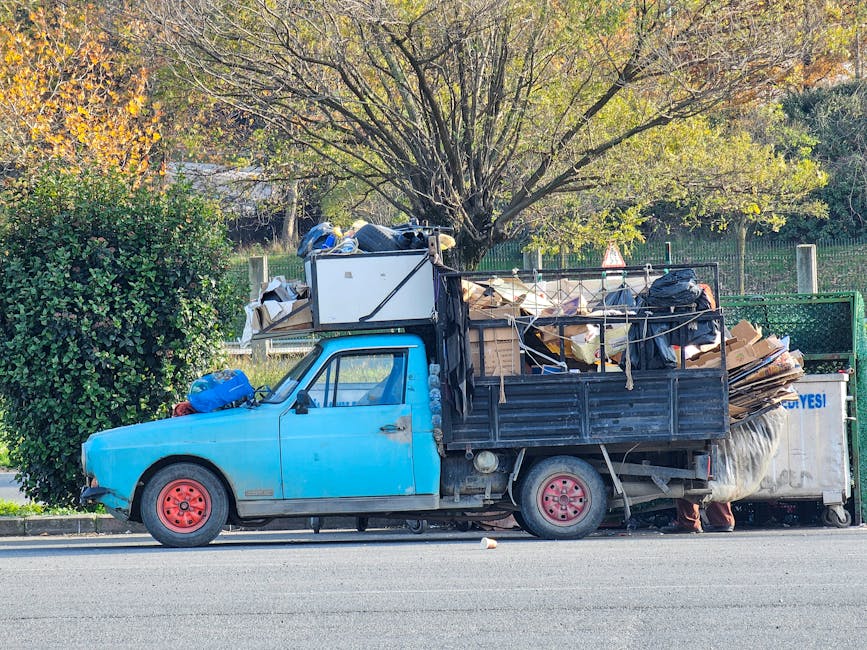
If you are dealing with a sofa that has seen better days, a broken wardrobe, or a pile of...

Belgravia, an epitome of elegance and sophistication, is one of London's most prestigious districts.

Belgravia, one of London's most prestigious areas, is known for its elegant streets, grand...

Belgravia, a prestigious district in Central London, is known for its grand stucco terraces and...

London, a bustling metropolis known for its iconic landmarks and vibrant culture, is a city that...

Belgravia, one of London's most affluent districts, is renowned for its elegant townhouses,...

 (81)
(81)